A Professional's Take on the New Titan 4K
The landscape of consumer electronics often moves in waves of incremental updates, but occasionally, a product arrives that attempts to redefine the baseline for its category. Entering a market already saturated with high-resolution displays and processing power, the Titan 4K represents an ambitious effort to bridge the gap between enthusiast-grade hardware and professional-level reliability. For the modern professional—ranging from digital content creators and software engineers to financial analysts who demand screen real estate and color accuracy—the choice of a primary interface is perhaps the most critical investment in their productivity suite.
In this editorial analysis, we examine the Titan 4K not merely as a collection of technical specifications, but as a tool designed for the rigors of a forty-plus hour work week. Buyers in this segment have moved past the initial novelty of Ultra-High Definition; they now care about pixel density, thermal management, panel longevity, and the subtle ergonomics of the user interface. The Titan 4K enters this fray with a promise of uncompromising performance, but does it truly deliver the stability required for a professional environment?
The Evolution of Professional Display Standards
To understand the significance of the Titan 4K, one must first understand the shift in the "professional" archetype. A decade ago, a professional setup was defined by bulky workstations and specialized monitors that cost more than a mid-sized sedan. Today, the lines have blurred. Professionals are mobile, they work in hybrid environments, and they require hardware that can pivot from intensive video rendering to spreadsheets and video conferencing without skipping a beat. The demand is for versatility without the sacrifice of precision.
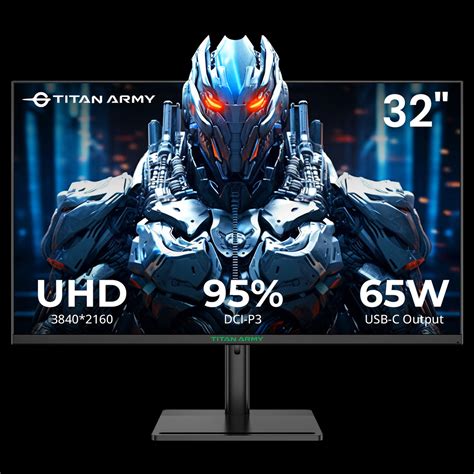
The Titan 4K addresses this by focusing on three main pillars: peak brightness with local dimming, color gamut coverage that satisfies the DCI-P3 standard, and connectivity that simplifies the modern desk setup. When a user is spending several thousand hours a year looking at a screen, "good enough" resolution is replaced by a need for "fatigue-reducing" clarity. This is where the Titan 4K seeks to differentiate itself from the consumer-grade 4K televisions that many have tried, and failed, to use as monitors.
Detailed Product Analysis: Engineering and Performance
The hardware architecture of the Titan 4K suggests a focus on sustained performance. While many competitive models boast high peak refresh rates that throttle down during periods of heavy thermal load, the Titan 4K utilizes a passive cooling structure integrated directly into the aluminum chassis. This ensures that the internal processing units—responsible for image scaling and color correction—remain at optimal temperatures even after hours of high-bitrate playback or 3D rendering.
Panel Technology and Color Accuracy
At the heart of the Titan 4K is an unconventional panel array that utilizes a sophisticated backlighting system. Unlike traditional edge-lit displays that suffer from "blooming" or "halos" around bright objects on a dark background, this unit employs a dense grid of local dimming zones. For the professional photographer or colorist, this translated to a black level that mimics the richness of organic light-emitting diode (OLED) technology while maintaining the superior brightness and burn-in resistance of a high-end liquid crystal display (LCD).
Color accuracy is another area where the Titan 4K claims a stake. Out of the box, each unit is calibrated to a Delta E of less than two, which is the threshold where the human eye can no longer perceive a difference between the actual color and the displayed color. For designers, this means the assurance that the red on the screen will be the same red that comes off a professional printing press. The inclusion of hardware-level calibration support allows professionals to use external colorimeters to maintain this accuracy over the lifespan of the device.
Connectivity and Workflow Integration
The back panel of the Titan 4K is a testament to the "one-cable" philosophy. With a high-bandwidth interface that supports power delivery, data transfer, and video signaling simultaneously, it serves as a central hub. This is particularly relevant for professionals using high-specification laptops who want to avoid the clutter of external docks and multiple power bricks. The internal circuitry supports an integrated KVM (Keyboard, Video, Mouse) switch, a feature that buyers increasingly care about as they manage multiple machines—perhaps a high-powered workstation for processing and a smaller laptop for communications—from a single set of peripherals.
Real-World Use Cases
Theory and specifications are secondary to how a device performs in the trenches. Content Creators will find the Titan 4K especially useful for editing 4K log footage. The ability to see the shadow detail without crushed blacks allows for more aggressive color grading. In contrast, Software Developers benefit from the vertical real estate and the "flicker-free" technology, which reduces the eye strain often associated with reading thousands of lines of code against a dark IDE background.
Shop the latest Electronics picks on Amazon.
View Offers →In the Financial and Data Analysis sector, the Titan 4K shines by allowing for the simultaneous display of multiple high-density windows. A trader can keep several live charts, a news feed, and a trade execution platform visible at the same time without the "bezel gap" interference found in multi-monitor setups. The stability of the image—specifically the lack of text blurring—ensures that small numbers and data points remain legible throughout the day.
Comparative Analysis
To provide a clearer picture of where the Titan 4K stands in the current market, it is helpful to compare it against the standard options available to professionals today. The following table highlights the key differentiators that most buyers prioritize during their research phase.
| Feature | Standard Consumer 4K | Mid-Range Prosumer Display | Titan 4K |
|---|---|---|---|
| Color Accuracy (Delta E) | < 5.0 (Varies) | < 3.0 | < 1.5 |
| Color Space Coverage | 95% sRGB | 99% sRGB / 85% DCI-P3 | 100% sRGB / 98% DCI-P3 |
| Dimming Zones | None (Edge-lit) | 16 - 32 Zones | 512+ Local Dimming Zones |
| Build Material | Plastic / Resin | Mixed Plastic/Metal | Industrial Grade Aluminum |
| Connectivity | Basic HDMI/DP | USB-C (Low Power) | Thunderbolt / 90W PD |
| Warranty / Support | 1 Year Limited | 2 Year Limited | 3 Year Pro-Support |
Pros and Cons
No piece of electronics is without its trade-offs. While the Titan 4K is a formidable contender, its design philosophy prioritizes certain aspects of the user experience over others. Understanding these strengths and weaknesses is essential for an informed purchase.
- Pro: Unmatched Build Quality - The use of high-grade materials ensures the device does not flex or creak, and the stand provides a level of stability rarely seen in mass-market electronics.
- Pro: True Color Precision - The factory calibration and wide gamut coverage make it a "reference-grade" tool for visual arts.
- Pro: Thermal Management - The chassis design allows for silent operation, eliminating the distracting fan noise found in some high-performance HDR monitors.
- Pro: Simplified Cable Management - The high-wattage power delivery through a single port significantly cleans up the professional workspace.
- Con: Heavier Footprint - Due to the industrial materials and internal cooling, the unit is significantly heavier than its competitors, requiring a sturdy desk or a heavy-duty VESA mount.
- Con: Steep Learning Curve for Menu Systems - The professional-grade OSD (On-Screen Display) offers immense control but can be overwhelming for those not used to adjusting lookup tables (LUTs) manually.
- Con: Price Point - It is positioned as a premium investment, which may be difficult to justify for those who do not derive direct income from the accuracy of their display.
A Professional Buying Guide: Is the Titan 4K Right for You?
Investing in a high-end 4K display is a decision that should be driven by the specific demands of your workflow. Many buyers fall into the trap of purchasing more technology than they realistically need, while others suffer from the "buy cheap, buy twice" cycle. To help determine if the Titan 4K fits your profile, consider the following criteria.
Assess Your Color Needs
If your primary work involves web development, administrative tasks, or general management, the extreme color accuracy of the Titan 4K might be surplus to requirements. However, if your output is destined for high-end print, cinema, or professional photography, the 98% DCI-P3 coverage is not a luxury—it is a necessity. The ability to trust what you see on screen reduces the time spent on revisions and ensures consistency across different viewing devices.
Consider Your Environment
Lighting plays a massive role in the effectiveness of any display. The Titan 4K features a high peak brightness and an anti-reflective coating that is specifically engineered for brightly lit offices. If you work in a space with large windows or overhead fluorescent lighting, the matte finish and high luminosity of this unit will be a significant upgrade over glossy consumer panels that act like mirrors under bright light.
Evaluate Ergonomics and Space
Before purchasing, measure your workspace. The Titan 4K is not just a screen; it is a substantial piece of furniture. It requires depth to allow the viewer to take in the entire 4K canvas without excessive neck movement. Furthermore, consider if your current desk can support the weight of an aluminum-chassis device. Professionals often overlook the importance of a high-quality stand; fortunately, the included stand with this unit offers height, tilt, and pivot adjustments that meet ergonomic standards for long-duration use.
Future-Proofing Your Hardware
One of the primary reasons buyers choose the Titan 4K is its longevity. Technology cycles are fast, but display standards for 4K are relatively stable. With the inclusion of the latest connectivity ports and a robust warranty program, this device is built to last through multiple computer upgrades. If you are someone who prefers to buy a high-quality product once every five to seven years rather than a mediocre one every two years, the Titan 4K aligns with those values.
Discover deals on Electronics — updated daily.
Shop Amazon →The Verdict on the User Experience
After prolonged usage, what truly stands out about the Titan 4K is the lack of friction. In most consumer-grade electronics, there is a constant reminder of the hardware's limitations—whether it is a slight delay in waking from sleep, a menu system that is difficult to navigate, or colors that shift slightly as the panel warms up. The Titan 4K manages to fade into the background. It becomes a transparent window into the professional's work.
The text rendering is particularly crisp. In 4K resolution, the sub-pixel arrangement matters immensely for those who read text all day. The Titan 4K avoids the "fringing" or "blurring" that can occur with certain panel types, ensuring that even at small font sizes, letters are sharp and well-defined. This leads to a noticeable reduction in eye fatigue at the end of a long workday, a benefit that is difficult to quantify in a spec sheet but easy to feel in practice.
Software integration also deserves a mention. The Titan 4K often comes with a dedicated utility that allows users to manage screen partitions and color profiles directly from their operating system. This eliminates the need to reach for physical buttons on the monitor, allowing for quick transitions between a "Cinema Mode" for reviewing video edits and a "Document Mode" for writing reports. It is these small, thoughtful implementations that elevate a product from a simple peripheral to a professional workstation component.
Maintenance and Longevity
To get the most out of an investment like the Titan 4K, professionals must adhere to a basic maintenance schedule. Dust accumulation can affect the passive cooling efficiency over time, so a regular wipe-down of the rear vents is recommended. More importantly, periodic recalibration—perhaps once every quarter—ensures that the panel remains true to its color specifications as the backlighting elements age naturally. The software includes "hours-on" tracking, which helps users stay aware of when it might be time to run a calibration cycle.
The durability of the physical ports is another highlight. In cheaper models, the HDMI and USB-C ports are often the first points of failure due to the stress of repeated plugging and unplugging. The Titan 4K utilizes reinforced connectors that are soldered firmly to the internal frame, providing a tactile click and long-term reliability that fits the "professional" moniker.
Conclusion
The Titan 4K is a specialized tool for a specific audience. It does not try to be everything to everyone; instead, it doubles down on the qualities that matter most to those whose livelihood depends on digital precision. Its strengths lie in its exceptional build quality, industry-leading color accuracy, and a thermal design that ensures stability over long hours of operation. While the weight and the initial cost may be hurdles for the casual buyer, they are the necessary byproducts of a device engineered without the usual shortcuts taken in mass production.
For the professional seeking a centerpiece for their office—a device that balances aesthetic elegance with industrial-strength performance—the Titan 4K sets a high bar. It respects the user's time by providing a seamless interface and protects the user's health by adhering to strict ergonomic and flick-free standards. In the crowded world of high-resolution electronics, the Titan 4K earns its place not by being the loudest or the most marketed, but by being the most reliable partner in the creative and analytical process. As we move further into an era where our digital screens are our primary windows to the world, investing in a high-caliber interface like the Titan 4K is not just a purchase; it is a commitment to a higher standard of work.