Is the Dell S3225Qc Still Good in 2026? Long-Term Review
I've been using the Dell S3225Qc as my primary monitor for the better part of a year and a half, rotating between office work, creative tasks, and the occasional gaming session. When I first unboxed it I was drawn to the size and curvature — a 31–32-inch curved display that promised a lot for its price. After several months of daily use, I'm ready to share what I actually liked, what annoyed me, and whether it still makes sense to buy in 2026.
Quick summary
In short: the S3225Qc remains a solid, practical 32-inch curved 4K option for people who want immersive productivity and good contrast without paying for a pro-grade color reference monitor. It excels at day-to-day tasks and media consumption, but it's not ideal if you need peak HDR, professional color-critical performance, or very high refresh rates for competitive gaming.
My setup and how I used it
I paired the S3225Qc with a 14-inch laptop via USB-C for work (document editing, spreadsheets, and Slack), a desktop PC via DisplayPort for photo editing and games, and occasionally a streaming box for movies. My typical workflow involved two main use cases: productivity (browser tabs, virtual desktops, spreadsheets) and creative work (light photo editing, video review). I also used it for casual and single-player gaming — nothing competitive.
Design and build
Out of the box the monitor felt reassuringly solid. The chassis is mostly matte plastic but with a clean, minimal Dell aesthetic that fits well on a desk. I appreciated the relatively small bezel for a monitor of this size — the curved glass and simple stand help it look less imposing than a flat 32-inch panel sometimes does.
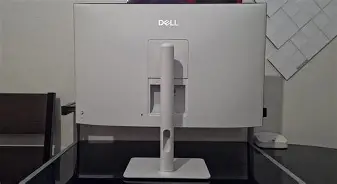
The stand provides the usual Dell adjustments: height, tilt, and a small amount of swivel. In my experience the ergonomics are good enough for extended daily use; I could raise it to line up with my eye level and tilt it to reduce glare. One thing I noticed was that the monitor's base takes up a bit more desk depth than I expected, so if you have a very shallow desk you might need to push it back or consider a monitor arm.
Display quality and what I noticed day-to-day
The S3225Qc's large curved VA panel delivers a pleasingly immersive experience for movies and productivity. Text at 4K on a 31–32" screen is crisp once you dial in scaling (I run 125–150% depending on the app). I found the native resolution strikingly useful for side-by-side windows — I can keep three documents visible without feeling cramped.
Contrast is where this monitor shines. Deep blacks and strong contrast ratios made video content look punchier than many IPS panels I’ve used. In low-light rooms, movies had more depth and darker scenes appeared more detailed. However, I also noticed the usual VA trade-offs: viewing angles are decent from a sitting position but colors shift if you move off-axis. If someone across from me glanced at the screen, the image would appear slightly washed or tinted — nothing that affected my work, but noticeable if multiple people need to view the display at once.
Color out of the box was decent for general creative work. I used a basic colorimeter to calibrate it and found that after calibration the S3225Qc is perfectly acceptable for photo editing that doesn't require absolute color-critical accuracy. That said, compared to higher-end IPS “UltraSharp” class monitors, the S3225Qc has a narrower color gamut and less uniformity across the panel. For professional color grading or print work I would still reach for a more expensive, factory-calibrated display.
Shop the latest Laptops & Computers picks on Amazon.
Shop Amazon →HDR, brightness and real-world performance
I tested HDR content (movies and some HDR-enabled games) and the experience was mixed. The monitor advertises HDR support, and HDR content is unquestionably more vivid — but it’s basic HDR implementation. Peak brightness is modest compared to today’s high-end HDR displays, and there’s no local dimming hardware to create dramatic highlights. What that means in practice is that HDR scenes look a bit richer but not dramatically different from SDR. If you care about true HDR impact, the S3225Qc won’t deliver the “wow” you might expect from flagship HDR panels.
One thing I found useful in daily use: the panel's uniformity is decent for a VA monitor. I had minor backlight bleed around the corners at certain brightness levels, but it never became a distraction during editing or watching movies. If you’re extremely sensitive to uniformity issues you may want to inspect units in person where possible.
Productivity and text clarity
For long days of writing and spreadsheet work I found the S3225Qc comfortable. Text at 4K is sharp and scaling support in modern operating systems has improved enough that apps behave well at my preferred scaling factor. I liked having so much screen real estate for referencing multiple documents and browser tabs. The curve actually helped me keep everything in my field of view without needing to swivel my head an excessive amount.
One annoyance: some older applications don’t handle scaling perfectly and required a little fiddling in Windows compatibility settings. This is not the monitor's fault, but it does mean you'll want to check how your most-used apps behave at 4K and your chosen scaling level.
Gaming and input performance
I played a mix of single-player titles and RPGs at 60Hz and the picture was immersive and enjoyable. Input lag was fine for casual play, and the curved panel made racing and flight sims feel more engaging. That said, the monitor is not aimed at high-refresh competitive gamers. The refresh rate caps out at 60Hz (as with most 4K VA monitors of this class) and there’s no VRR support with the same polish you get on gaming-centric displays. If you care about 144Hz or adaptive sync performance for competitive shooters, this is not the right pick.
Connectivity and USB-C experience
One of the reasons I chose this monitor was the convenience of USB-C. In my day-to-day I appreciated being able to dock my laptop to the monitor with a single cable that carried video, data, and power. Charging felt reliable for my laptop; I never had to plug the laptop charger in separately when working at the desk. The monitor also has the usual HDMI and DisplayPort inputs, plus a small USB hub which came in handy for plugging in a keyboard dongle and a drive.
Small practical notes I ran into: the on-screen menu (OSD) is functional but not particularly fast to navigate, and the joystick control takes a short learning curve. Firmware updates were infrequent during my time with it, so I never encountered any major bugs that needed addressing via updates.
Shop the latest Laptops & Computers picks on Amazon.
Browse Now →Built-in speakers and extras
The S3225Qc includes built-in speakers that are usable for notifications and casual video. I found them fine for background shows and conference calls, but they lack bass and clarity compared to even modest external speakers or good headphones. If audio quality matters, plan to use external speakers or headphones.
Long-term reliability and real-world durability
After a year and a half of near-daily use I haven’t experienced any dead pixels or panel degradation. The stand has remained sturdy, and the monitor's finish has held up against dust and fingerprints reasonably well. I did notice one small cosmetic issue: the matte finish on the base accumulated tiny scuffs from regular cable management, but that’s purely cosmetic.
On the software side, I didn't have driver conflicts or system stability issues related to the monitor. It behaved like a plug-and-play device across Windows and macOS with only the usual small setup steps required for 4K scaling.
Pros & Cons
- Pros:
- Immersive size and curve: Great for multi-window productivity and media.
- Excellent contrast: Deep blacks and richer-looking video versus many IPS displays.
- Convenient connectivity: USB-C docking approach made my desk tidier and simpler.
- Good value for everyday creators: Solid color after calibration for non-critical photo/video editing.
- Sturdy build: Stable stand and durable feel over months of use.
- Cons:
- Basic HDR: HDR support is limited by peak brightness and lack of local dimming.
- Not color-accurate enough for pro work: Narrower gamut and uniformity limits compared to pro IPS panels.
- 60Hz cap: Not ideal for high-refresh competitive gaming.
- Viewing-angle color shift: Typical VA behavior; not ideal for collaborative review situations.
- Speakers are weak: Use external audio for anything more than meetings or background sound.
How it compares — a quick table
| Model | Panel Type | Best for | Not ideal if |
|---|---|---|---|
| Dell S3225Qc | Curved VA (32") | Productivity, media consumption, casual creative work | Professional color grading, high-refresh competitive gaming |
| Dell Ultrasharp (example alternative) | Flat IPS (32", pro-class) | Color-critical photo/video work, office productivity | Users who want deeper blacks and stronger contrast |
| LG 32-inch 4K (ergonomic alternative) | Flat IPS with ergonomic arm | Ergonomics-first desks, creatives who need accurate colors | Those wanting a curved, more cinematic feel |
Buying guide: should you get the S3225Qc in 2026?
Who this monitor is for
- You're a remote worker or knowledge worker who wants a large, immersive desktop for holding multiple windows and virtual desktops.
- You value deep blacks and contrast for watching movies and streaming, and you want better contrast than typical IPS displays at a similar price.
- You like the simplicity of one‑cable USB-C docking for video, data, and laptop charging to reduce clutter.
- You do light photo and video editing but don't require studio-grade color accuracy or hardware calibration for print work.
Who should look elsewhere
- If you need true HDR with high peak brightness and local dimming, consider higher-end HDR monitors or OLED displays.
- If you’re a competitive gamer who wants low-latency 144Hz+ performance, look for gaming-specific 4K or ultrawide monitors with higher refresh rates and proven adaptive-sync performance.
- If you do color-critical work for print or broadcasting, a professional IPS monitor with wide color gamut and factory calibration is a better investment.
What to check before you buy
- Confirm that the USB-C power delivery meets your laptop's needs — if you have a power-hungry workstation laptop you may still need a dedicated charger.
- If possible, inspect a unit in person for backlight uniformity and color shift, especially if you need consistent shading across the panel.
- Ask about warranty and return options: panel issues like stuck pixels or noticeable uniformity defects are rare but not impossible.
- Think about desk depth and stand footprint — the base is stable but takes up space.
Final thoughts
After many months of using the Dell S3225Qc, I can say it still feels relevant in 2026 for a large group of users. What kept it on my desk long-term was the combination of immersive size, excellent contrast, and convenient USB-C connectivity. For everyday productivity, mixed creative work, and watching movies, it does the job very well.
At the same time, I was never under the illusion that it was a professional reference display or a high-refresh gaming monitor. Its compromises — modest HDR, a 60Hz refresh cap, and typical VA viewing-angle shifts — are the price of a well-rounded panel that sits comfortably in the mid-market segment. If those trade-offs align with your priorities, the S3225Qc remains a practical and satisfying monitor in 2026.